Quick answer
As of September 2026, installing a ceiling fan on an existing fan-rated box in St. George, UT typically costs $140–$350, replacing a light fixture $150–$500, and recessed lighting $125–$300 per light. The box, the switch, and ceiling access decide most of the price. St. George Electric Pro matches Washington County homeowners with an independent, licensed electrician at no cost.
St. George Electric Pro · St. George, UT and Washington County
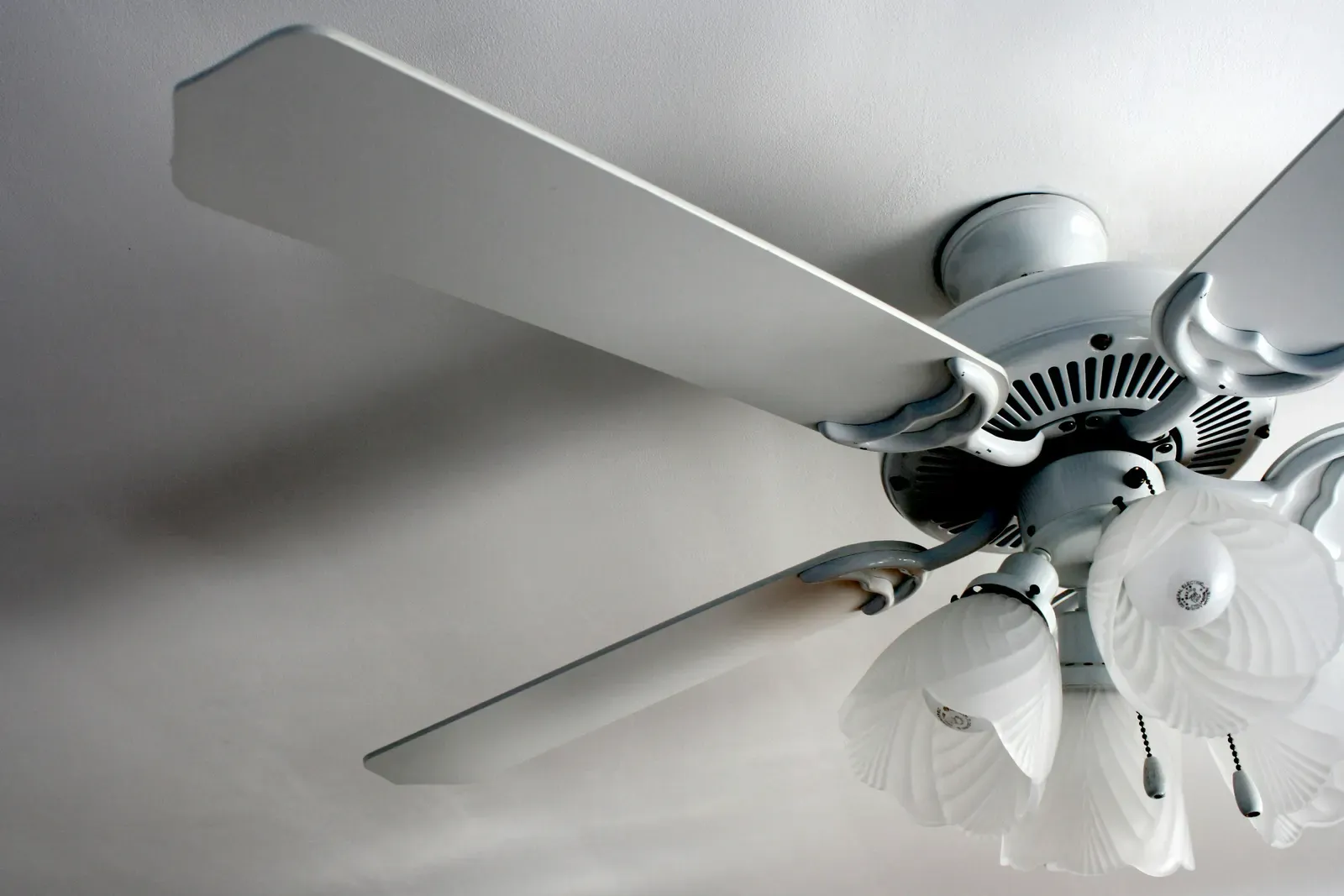
What counts as a lighting or ceiling fan job
Lighting work is the most routine thing an electrician does and one of the easiest to underestimate. The fixture is the visible part; the box it hangs from, the switch that controls it, and the circuit behind both decide whether a job takes forty minutes or most of a day. These are the requests that come up most in Washington County homes:
-
Swap a light for a ceiling fan
The most common request in this climate. Simple when the box is fan-rated and a switch already controls it; more work when either is missing.
-
Replace a light fixture
Like-for-like swaps are quick. Heavy fixtures, chandeliers, and high ceilings add time, a ladder or lift, and sometimes a new box.
-
Add recessed (can) lights
Priced per light. Attic access, insulation, and whether a new circuit is needed decide most of the cost.
-
Dimmers, smart switches, and controls
LED-rated dimmers, three-way switches, and smart controls. Most smart switches need a neutral wire in the box.
-
Outdoor and security lighting
Porch, garage, and entry fixtures, motion lights, and landscape lighting. Wet-location ratings apply, and Ivins has its own rules.
-
New switches and new circuits
A fan where no switch exists, lighting in a new room, or a fixture where there was none means new wiring back to a switch or the panel.
Many of these bundle well. The service call is the fixed part of any small job, so a fan in the primary bedroom, two fixture swaps, and a dimmer in the kitchen usually cost less on one visit than on three.
Ceiling fans in a desert climate
In most of the country a ceiling fan is a nice-to-have. Here it is part of how a house gets through the summer. St. George recorded its hottest July on record in 2024, with an average high of 107.9°F and 46 consecutive days at or above 100°F, according to National Weather Service figures reported by KUER. In that heat, air conditioning runs for most of the day, and anything that lets you set the thermostat a few degrees higher pays for itself.
The U.S. Department of Energy’s Energy Saver guidance on fans says a ceiling fan lets you raise the thermostat setting about 4°F with no reduction in comfort. Two details from the same page matter. First, run the fan counterclockwise in summer so it pushes air down. Second, turn fans off when you leave a room: a fan cools the people under it by moving air across their skin, not the room itself, so a fan spinning in an empty bedroom is only adding heat from its motor.
That is why bedrooms, the main living area, and covered patios are the usual first choices. A patio fan also needs to be rated for where it hangs; more on that under outdoor lighting below.
Before a fan goes up: the four things an electrician checks
A ceiling fan is a heavy object that spins, often for hours a day, above a bed or a couch. That is why the electrical side of the job is stricter than a light fixture swap, and why a quote can change once the electrician sees the ceiling.
-
A box listed for fan support
A ceiling fan must hang from an electrical box marked as listed for fan support, or from a fan-rated brace. An ordinary light box is not built for a moving load, even if the fan seems light.
-
Ceiling height and blade clearance
The U.S. Department of Energy says fans work best with blades 7 to 9 feet above the floor and 10 to 12 inches below the ceiling, and no closer than 8 inches to the ceiling or 18 inches to a wall.
-
How the fan will be controlled
One switch for fan and light, two switches, a wall control, or a remote. Separate switching for the light usually means an extra conductor between the switch and the box.
-
Sloped or vaulted ceilings
Common in newer St. George builds. The fan needs a canopy and downrod rated for the slope, and a high ceiling adds ladder time.
The box is the item most often missed on do-it-yourself installs. An ordinary round light box held by a couple of small screws was never meant to carry a fan that wobbles slightly every time it runs. Over months the screws loosen, and a loose box is both a falling hazard and a poor electrical connection. Fan-rated retrofit braces are made to slide in through the existing ceiling hole and span the joists, so replacing the box rarely means patching drywall.
Switching is the other common surprise. If the light you are replacing is on one switch and you want the fan and its light controlled separately, the wiring between the switch and the ceiling box needs an extra conductor, or you use a wall control or remote that handles both over the existing wiring. If no switch controls the ceiling box at all, a new switch leg is part of the job.
Light fixtures and chandeliers
Replacing one ceiling or wall fixture with another of similar size, on a sound box, is short work. Price climbs with weight, height, and the condition of what is already there:
- Heavy fixtures. Large chandeliers and pendants may need a box and support rated for their weight, the same idea as the fan box above.
- High ceilings. Entry halls and great rooms with vaulted or two-story ceilings add ladder time, sometimes scaffolding, and a second person to hold the fixture while it is wired.
- Old wiring at the box. Opening an older fixture sometimes reveals heat-brittle insulation on the conductors from decades of hot incandescent bulbs. It is worth fixing while the fixture is down.
- Aluminum branch wiring. Homes and additions wired between 1965 and the mid-1970s may have it. Fixtures need connection methods rated for aluminum; the fire warning signs guide summarizes the Consumer Product Safety Commission’s recognized repairs.
Recessed lighting
Recessed or can lights are priced per light, and most rooms take between four and eight. The per-light price covers cutting the hole, the housing or canless LED fixture, and wiring it to the next one; what moves the total is how easily the electrician can get wire across the ceiling. A single-story home with attic access above the room is the easy case. A ceiling with a finished floor above it means fishing wire between joists, which takes longer and sometimes means small access holes.
Two more details matter here. Where a fixture sits against attic insulation, it has to be IC-rated, meaning rated for insulation contact, and in an attic that gets as hot as a St. George attic in July, an airtight-rated housing also keeps conditioned air from leaking up around each light. And a room full of new lights on an existing circuit can push that circuit toward its limit; LED fixtures draw little, but the electrician will still check what else the circuit feeds.
Dimmers, switches, and smart controls
Most flicker and buzz complaints trace back to controls, not fixtures. A dimmer designed for incandescent bulbs does not control low-wattage LEDs smoothly, so the fix is an LED-rated dimmer that lists your bulbs as compatible. Three-way switching, where two switches control one light, is easy to mis-wire during a swap and is a common reason one switch “stops working.” Smart switches and smart dimmers mostly need a neutral wire in the switch box, which many older homes do not have. The outlet and switch guide covers all three in more detail.
Outdoor and security lighting, and the Ivins dark-sky rules
Outdoor fixtures have to be rated for where they go. A fixture under a covered porch needs a damp-location rating; one exposed to rain and sprinklers needs a wet-location rating. The same goes for patio ceiling fans. The rating is on the fixture’s label, and it is worth checking before you buy, because an indoor-rated fixture outdoors fails early in this sun and heat.
Ivins adds a local layer. Ivins City Code section 16.23.105, updated by ordinance in 2021, sets outdoor lighting rules that apply to residential fixtures, not just commercial signs and parking lots. The main points for a homeowner:
-
Full cut-off, fully shielded
Outdoor fixtures in Ivins must be fully shielded so no direct light goes above the horizontal or spills onto neighboring property or the street.
-
3,000 K or warmer at home
Residential outdoor lamps are capped at 3,000 Kelvin, the warm-white end of the LED range. A cool-white 5,000 K floodlight does not qualify.
-
Security lights on a motion sensor
Residential security lighting must be fully shielded and on a motion sensor with a five-minute timer, not left on all night.
-
Porch, garage, and entry fixtures shielded
The everyday fixtures by the front door and the garage count too. Many decorative lanterns with clear glass on every side do not qualify.
If your home is in Ivins, say so when you request a match, so the electrician recommends compliant fixtures from the start rather than swapping them after a neighbor complains. The rules are good practice anywhere in the county: shielded, warm-white fixtures light the ground where you need it, cut glare on the street, and keep the night sky visible from the backyard. The Ivins section of the county service areas page covers the city’s utility and the rest of what is different about electrical work there.
Motion-activated security lighting is also where many homes waste the most power. A photocell or motion sensor on the fixtures that currently run dusk to dawn, with warm-white LED lamps, is a small job that meets the Ivins rule and lowers the bill elsewhere in the county too.
What lighting and fan work costs
Typical ranges for licensed electricians in the St. George area, not quotes. Sources and methodology are on the electrician cost guide.
| Job | Typical range | What moves it |
|---|---|---|
| Ceiling fan install (existing wiring and box) Add a new fan-rated box or a new switch leg and it can double. | $140–$350 | Add a new fan-rated box or a new switch leg and it can double. |
| Light fixture replacement Chandeliers, high ceilings, and new boxes cost more. | $150–$500 | Chandeliers, high ceilings, and new boxes cost more. |
| Recessed / can light Priced per light; most jobs are 4–8 lights. | $125–$300 per light | Priced per light; most jobs are 4–8 lights. |
| Light switch or dimmer Three-way and smart switches at the high end. | $85–$250 | Three-way and smart switches at the high end. |
| Service call fee (usually covers the first hour) Some shops charge a separate trip fee instead of a service call. | $100–$200 | Some shops charge a separate trip fee instead of a service call. |
| Licensed electrician, hourly rate Journeyman at the low end, master electrician at the high end. Many shops quote flat rates for common jobs instead. | $60–$110 per hour | Journeyman at the low end, master electrician at the high end. Many shops quote flat rates for common jobs instead. |
Three things push a lighting quote to the top of its range or past it: no fan-rated box where the fan will hang, no switch or wiring where the new light will go, and a ceiling that is hard to reach from above or below. The fixture itself is usually on you, so ask whether the quote includes supplying it. If you are having several things done, list them all up front; the hourly rate guide explains how service calls, trip fees, and flat rates work.
Permits and hiring
Swapping a fixture on an existing box is generally treated differently from adding new wiring, but permit rules are set locally, so ask the electrician whether your job needs one. New circuits, new switch legs run from the panel, and work tied into a remodel usually do, and the contractor pulls the permit. In Utah, electrical contractors are licensed by the state; ask for the license number and check it on the DOPL lookup, or follow the license verification guide. St. George Electric Pro is a referral service: we pass your request to an independent, licensed electrician who covers your area, and they quote and do the work.