Quick answer
As of September 2026, installing a Level 2 home EV charger in St. George, UT typically costs $700–$2,000 when the panel has capacity, or $2,000–$4,500 when a 200-amp panel upgrade is needed too. The federal 30C tax credit for home chargers expired on June 30, 2026. St. George Electric Pro matches Washington County homeowners with an independent, licensed electrician at no cost.
St. George Electric Pro · St. George, UT and Washington County
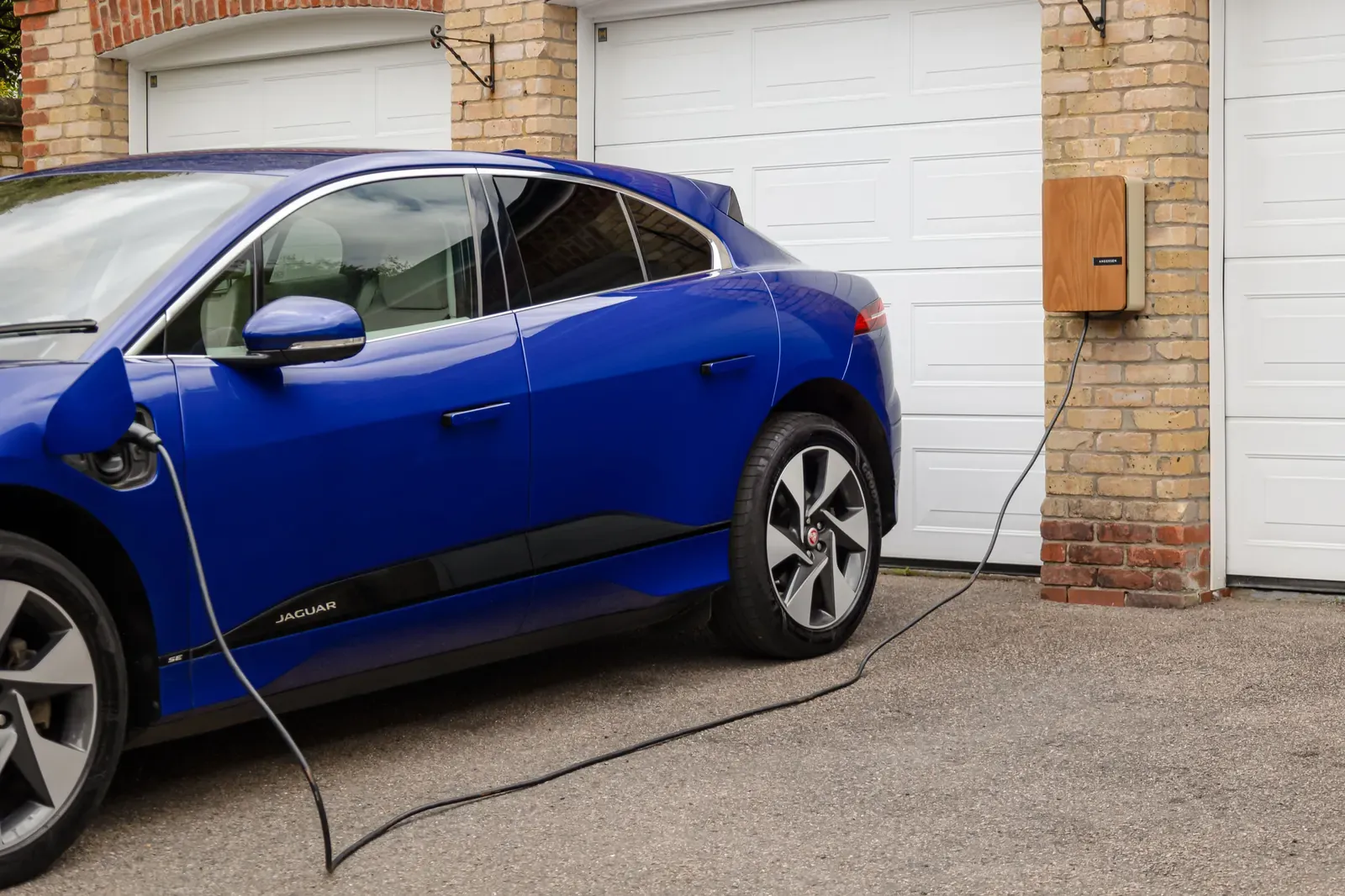
Level 1 or Level 2?
Almost every homeowner asking this question ends up at Level 2, but it is worth knowing why. Level 1 is free if you already have a garage outlet on its own circuit (and nothing is free about sharing one with the freezer). Level 2 is a real electrical project.
-
Level 1: a 120-volt outlet
The cord that came with the car, plugged into a dedicated garage outlet. Adds roughly 3–5 miles of range per hour. Fine for a plug-in hybrid or a short commute; slow for a full battery.
-
Level 2: a 240-volt circuit
A hardwired charger or a NEMA 14-50 outlet on a 40–60-amp circuit, like a dryer or range. Adds roughly 20–40 miles of range per hour and refills most batteries overnight. This is the install most St. George homeowners want.
Range-per-hour figures are typical, not guaranteed; the car’s onboard charger and the circuit size set the actual rate.
The panel check comes first
In St. George the EV charger conversation is usually a panel conversation in disguise. A Level 2 charger needs a dedicated 240-volt circuit of 40 to 60 amps. On a home with 200-amp service and gas appliances, that circuit almost always fits. On a 100-amp panel that already carries central air conditioning (which in this climate runs near full load for months), an electric range, a dryer, and a water heater, it often does not.
A licensed electrician settles this with a load calculation, the same one the electrical code requires for a panel upgrade. Three outcomes are common: the circuit fits as-is; the circuit fits if you use a charger with built-in load management that throttles when the AC and dryer are running; or the panel has to be upgraded first. The panel upgrade guide covers that third path, including why it is so common in older St. George, Santa Clara, and Washington City neighborhoods.
What moves the price
-
Panel capacity
The first question every electrician asks. A Level 2 charger needs a dedicated 40–60-amp circuit. On a full or 100-amp panel, that means a panel upgrade or a load-managing charger.
-
Distance from the panel
Panel in the garage, charger on the next wall: cheap. Panel on the far side of the house, or a detached garage: a long run, conduit, maybe trenching.
-
Hardwired vs. plug-in
A hardwired charger is cleaner and required above 48 amps of charging; a 14-50 outlet lets you take a portable charger with you. Either is fine when done to code.
-
Heat and location
A charger on a sun-facing exterior wall in St. George bakes. Electricians here favor shaded or interior garage placement, and outdoor-rated units where that is not possible.
-
Permit and inspection
A new 240-volt circuit is permitted work. The contractor pulls it; the inspector checks the breaker size, wire gauge, and GFCI protection where the code requires it.
-
The car itself
Onboard chargers cap the rate: many cars take 7–11 kW, some 19 kW. Buying a 19-kW charger for a 7-kW car buys nothing but a bigger circuit.
EV charger installation cost in St. George
Typical ranges for a licensed electrician in Washington County, blended from 2026 national cost surveys and local data points. Not a quote; the electrician you are matched with sets the price. Full breakdown, sources, and methodology on the EV charger cost guide.
| Job | Typical range | What moves it |
|---|---|---|
| Level 2 charger, installed (panel has room, short wire run) Charger on the panel wall or the adjacent garage wall, 40–60-amp circuit. | $700–$2,000 | Charger on the panel wall or the adjacent garage wall, 40–60-amp circuit. |
| Level 2 charger when a panel upgrade is also needed Charger install plus the 200-amp panel work above. | $2,000–$4,500 | Charger install plus the 200-amp panel work above. |
| Level 2 charger unit (hardware only) Basic units near the low end; smart, load-managing units near the high end. | $300–$1,000 | Basic units near the low end; smart, load-managing units near the high end. |
| Electrician labor for a Level 2 install Depends on distance from the panel and whether conduit is needed. | $400–$1,200 | Depends on distance from the panel and whether conduit is needed. |
| Long wire run / new circuit (detached garage, far wall) Trenching or attic runs push this up. | $500–$1,500 | Trenching or attic runs push this up. |
| Permit for an EV charger circuit National range; local fee not separately sourced. | $100–$200 | National range; local fee not separately sourced. |
| Level 1 (a dedicated 120-volt outlet in the garage) Slow charging, no charger hardware to buy. | $200–$600 | Slow charging, no charger hardware to buy. |
Incentives: where things stand in September 2026
The big one is gone. The federal 30C Alternative Fuel Vehicle Refueling Property credit, which covered 30% of a home charger installation up to a cap for eligible addresses, expired on June 30, 2026. If you see a local page still advertising it, that page is out of date. Installations completed after that date do not qualify, and we found no state-level Utah income-tax credit for home chargers to replace it.
Utility rebates are the other place to look, and in Washington County the answer as of this writing is thin. The Utah Energy Hub, maintained by the nonprofit Utah Clean Energy, states there are currently no utility incentives for home EV charging in Utah. Rocky Mountain Power, which serves only pockets of this county, lists EV programs aimed at businesses and multifamily properties. St. George Energy Services, Dixie Power, Washington City Power, Hurricane City Power, and Santa Clara’s municipal utility publish their own programs, so it is worth a call to yours before the install, but do not build the budget around a rebate.
Incentive rules change. This section was checked in September 2026; confirm with your utility and a tax professional before relying on it.
How the install goes
- Site visit or photos. The electrician looks at the panel, measures the run, and asks about the car and the charger you want (or recommends one).
- Load calculation and quote. Written, itemized: circuit, charger, permit, and any panel work called out separately.
- Permit. Pulled by the contractor with St. George City or Washington County, depending on where you live.
- Install. A dedicated breaker, correctly sized wire, GFCI protection where required, the charger mounted and tested. Usually half a day when no panel work is involved.
- Inspection. The inspector signs off; keep the permit record with the house documents.
Questions to ask before you sign
- “Did you run a load calculation on my panel?” If the answer is “it will be fine,” ask again.
- “Is the permit and inspection in this quote?” It should be.
- “What is the circuit size, and does the charger match it?” A 48-amp charger needs a 60-amp circuit; a 32-amp charger needs 40.
- “What is your Utah electrical contractor license number?” Verify it on the DOPL lookup.
- “Is the charger outdoor-rated if it is going on an exterior wall?” Summer sun here is hard on plastics.
How the match works
St. George Electric Pro is a referral service, not a contractor. Your request goes to an independent, licensed local electrician who does EV charger work in your part of Washington County; they contact you, quote the job, and do the work. Homeowners pay nothing to be matched. We work with electricians who report holding a Utah license, but we do not verify every license ourselves, so check the number they give you.