Quick answer
As of September 2026, a 200-amp panel upgrade in St. George, UT typically costs $1,600–$3,000 when the meter and service entrance can stay and $3,000–$4,500 when they must be replaced; whether you need one depends on a load calculation, not the age of the panel. St. George Electric Pro matches Washington County homeowners with an independent, licensed electrical contractor at no cost.
St. George Electric Pro · St. George, UT and Washington County
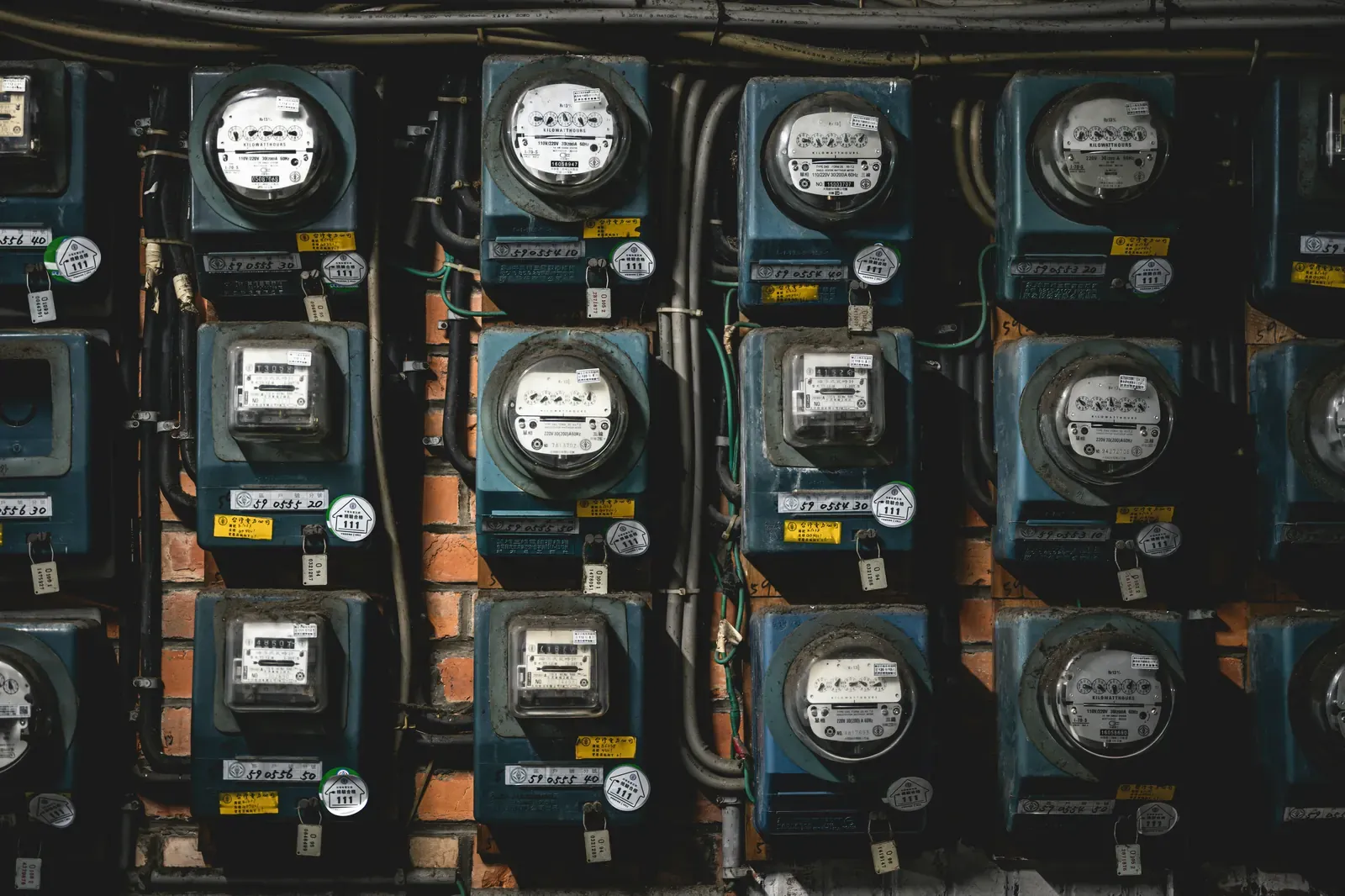
What “200 amps” actually means
“Upgrade to 200 amps” gets used for several different jobs, and the price difference between them is thousands of dollars. The confusion comes from four separate numbers that all live at or near the panel. Knowing which one limits your house is most of the battle.
-
Service rating
What the utility connection, the service conductors, and the meter base are built to deliver. This is the number that limits the whole house.
-
Panel (bus) rating
What the panel’s internal bars can carry. A 200-amp-rated panel can sit on a 100-amp service and still only give you 100 amps.
-
Main breaker
The big breaker at the top that trips when the whole house draws more than the service can deliver. It should match the smallest of the ratings above.
-
Breaker spaces
How many circuits the panel physically has room for. A panel can be out of space long before it is out of capacity, or the reverse.
The house can only use the smallest of the first three. That is why two quotes for “a 200-amp upgrade” can be so far apart: one may replace only the panel, assuming the service conductors and meter base are already rated for 200 amps, while the other replaces the whole service from the utility connection inward. Ask every contractor which of the four numbers their quote changes.
100, 150, 200, or 400?
Older and smaller homes often have 100-amp service. Many homes from the building booms of the past few decades have 150 or 200. Today, 200 amps is the practical standard for a single-family home, and it is what most contractors will recommend when a house outgrows 100 or 150.
- 100 amps can still be adequate for a modest home with gas heat and appliances. Add central AC, an electric dryer, and a pool pump and it runs out quickly in a St. George summer.
- 150 amps is a common middle ground. It often has room for one EV charger with load management, but little beyond that.
- 200 amps covers most homes with central AC, electric appliances, a pool, and one Level 2 charger.
- 400 amps is for large homes, multiple EVs, a casita with its own AC and kitchen, large shops, or big all-electric heating loads. It runs $4,000–$6,000 and is uncommon.
The load calculation decides, not the rule of thumb
A good electrician will not tell you that you need 200 amps because your panel is old. They will run a load calculation, the method in the National Electrical Code’s load-calculation article (Article 220), which adds up the home’s square footage, its fixed appliances, and its heating and cooling, and applies the code’s allowances for the fact that not everything runs at once. The result is the capacity the service needs to have.
In Washington County, that calculation is dominated by a short list of loads. If you are adding any of these, or already have several, they are what the electrician will ask about first.
-
Central AC or heat pump
The load that defines St. George panels. A large system running for hours in July is the base everything else stacks on.
-
EV charger
A Level 2 charger is a large, continuous load, typically a 40- to 60-amp circuit, running for hours at a time.
-
Pool pump, pool heater, or hot tub
Common in Washington County backyards; a hot tub alone usually needs its own 240-volt circuit.
-
Casita, ADU, or garage workshop
A second living space means a second set of heating, cooling, and kitchen loads, usually fed by a subpanel.
-
Electric range, dryer, and water heater
Standard 240-volt loads that were sized for when the house was built, before everything above was added.
-
Solar and battery storage
Solar can raise the panel rating you need, because of how much backfed power a panel bus is allowed to carry.
Bring the calculation into the conversation yourself: ask the contractor to show you the result and the loads they counted. If they cannot, or the number is a guess, keep collecting quotes.
Why capacity runs short in a St. George summer
The trigger for most panel upgrades here is the same: a main breaker that trips in July and August and never in April. St. George recorded its hottest July on record in 2024, with an average high of 107.9°F and 46 consecutive days at or above 100°F, according to National Weather Service figures reported by KUER. In that heat, central air runs close to continuously, and every other load in the house stacks on top of it. A service that is fine for nine months a year is not fine for three.
The second trigger is additions. Growth across the county means a lot of homes are adding a charger, a pool, a casita, or a shop to a service that was sized for none of them. The panel hub covers the warning signs; the panel upgrade guide is the place to start if you are not sure whether you are there yet.
Panel-only or service upgrade: the fork in the price
This is the single biggest cost decision in the project, and it is decided by what is already on your house, not by preference.
- Panel-only. If the service conductors, meter base, and utility connection are already rated for 200 amps (common when a home was built with 200-amp service but a smaller or failing panel, or when a previous owner upgraded part of the way), the job is swapping the panel and main breaker. Typically $1,600–$3,000.
- Full service upgrade. If the service is 100 or 150 amps from the meter outward, the service entrance conductors, the meter base, and sometimes the mast or the underground conduit have to be replaced as well, and the utility has to be involved. Typically $3,000–$4,500.
Whether your service comes in overhead through a mast on the roof or underground to a meter on the wall changes the details and the utility’s role, but not the principle. Your power provider may also need to confirm that its transformer and service drop can supply the new rating. The county service areas page lists which provider serves each community; your electrician deals with them directly.
| Job | Typical range | What moves it |
|---|---|---|
| Replace a 100-amp panel (same size) Like-for-like swap of a failed or recalled panel. | $800–$1,500 | Like-for-like swap of a failed or recalled panel. |
| Upgrade to a 200-amp panel The common upgrade for AC load, an addition, or an EV charger. Assumes the service entrance and meter can stay. | $1,600–$3,000 | The common upgrade for AC load, an addition, or an EV charger. Assumes the service entrance and meter can stay. |
| 200-amp upgrade with a new service entrance, mast or meter base Needed when the wiring from the utility drop to the panel is undersized for 200 amps. Involves the utility. | $3,000–$4,500 | Needed when the wiring from the utility drop to the panel is undersized for 200 amps. Involves the utility. |
| Upgrade to 400-amp service Large homes, workshops, multiple EVs, or a casita. Uncommon. | $4,000–$6,000 | Large homes, workshops, multiple EVs, or a casita. Uncommon. |
| Add a subpanel (garage, casita, workshop) Only if the main panel has the capacity to feed it. | $400–$1,750 | Only if the main panel has the capacity to feed it. |
| Electrical permit for a panel change National range. St. George City and Washington County publish their own fee schedules; ask your electrician for the exact local fee. | $50–$300 | National range. St. George City and Washington County publish their own fee schedules; ask your electrician for the exact local fee. |
Typical ranges for licensed contractors in the St. George area, not quotes. Sources and methodology are on the panel upgrade cost guide, the canonical home for panel pricing on this site.
Alternatives worth asking about first
A full service upgrade is not always the right answer. Depending on what you are adding and what the load calculation shows, one of these may solve the problem for less.
-
A load-sharing or lower-amperage EV charger
Many chargers can be set to draw less, or to share a circuit, which can avoid a service upgrade for one EV.
-
A load-management device or smart panel
Monitors the house and briefly pauses a big load, such as the charger, when the total gets close to the service limit. Your electrician confirms it is allowed for your setup.
-
A subpanel
Adds breaker spaces for $400–$1,750, but adds no capacity. It solves a space problem, never a tripping-main problem.
-
Fixing the real fault
A main that trips once a summer may be a failing breaker or a loose connection rather than an undersized service. A diagnosis comes before a quote.
Solar, batteries, and the panel rating
If you are planning rooftop solar or a home battery, raise it before the panel is chosen. A solar system feeds power into the panel as well as drawing from it, and the code limits how much combined current a panel’s bus bars may carry. A panel that is fine for your loads can still be too small for the solar array you want, which is why solar installers sometimes include a panel upgrade, or a bus-rating change, in their quote. Coordinating the two jobs avoids paying for the panel twice.
What happens on upgrade day
-
Permit and utility scheduling
The contractor pulls the permit and, for a service change, coordinates the disconnect and reconnect with your power provider.
-
Power off for most of a day
Most panel-only swaps are a single-day job with the house off for several hours. Plan around the refrigerator and medical equipment.
-
Old panel out, new panel in
Circuits are moved over one by one, labeled, and brought up to current requirements where the work triggers it.
-
Inspection
A city or county inspector checks the work, sometimes before the utility will reconnect a new service.
-
Final paperwork
You should get a clear panel directory, the permit sign-off, and the warranty terms in writing.
Ask in advance how long the power will be off and whether the inspection has to happen before the utility reconnects a new service. Keep the refrigerator closed; the outage guide has the food-safety timings.
Questions to ask every contractor
- “Is this panel-only or a full service upgrade?” Make each quote say which.
- “Can I see the load calculation?” It is the justification for the whole job.
- “Who pulls the permit, and who coordinates with the utility?” The answer should be the contractor, for both.
- “Would load management or a lower-amperage charger avoid this?” An honest contractor will tell you when it would.
- “What is your Utah contractor license number?” Check it with the state; the verification guide shows how.
St. George Electric Pro is a referral service: we pass your request to an independent, licensed electrical contractor who covers your area, and they quote and do the work.